Adama, p.1
Adama, page 1
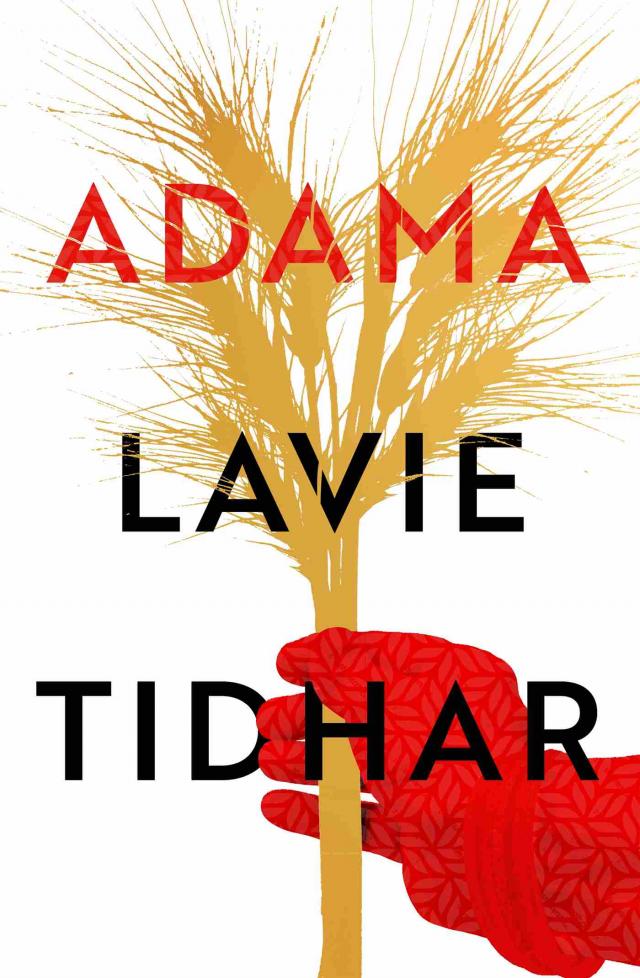


ADAMA
ALSO BY LAVIE TIDHAR
Maror
ADAMA
LAVIE TIDHAR
www.headofzeus.com
First published in the United Kingdom in 2023 by Head of Zeus,
part of Bloomsbury Publishing Plc
Copyright © Lavie Tidhar, 2023
The moral right of Lavie Tidhar to be identified as the author of this work has been asserted in accordance with the Copyright, Designs and Patents Act of 1988.
All rights reserved. No part of this publication may be reproduced, stored in a retrieval system, or transmitted in any form or by any means, electronic, mechanical, photocopying, recording, or otherwise, without the prior permission of both the copyright owner and the above publisher of this book.
This is a work of fiction. All characters, organizations, and events portrayed in this novel are either products of the author’s imagination or are used fictitiously.
A catalogue record for this book is available from the British Library.
ISBN (HB): 9781804543467
ISBN (XTPB): 9781804543474
ISBN (E): 9781804543443
Cover design: Ben Prior
Head of Zeus Ltd
5–8 Hardwick Street
London EC1R 4RG
WWW.HEADOFZEUS.COM
CONTENTS
Also by Lavie Tidhar
Title Page
Copyright
Family Tree
PART ONE: THE END Chapter 1
PART TWO: LIOR’S RETURN HOME Chapter 2
Chapter 3
Chapter 4
Chapter 5
Chapter 6
Chapter 7
Chapter 8
Chapter 9
Chapter 10
Chapter 11
Chapter 12
Chapter 13
PART THREE: TWO LITTLE GIRLS Chapter 14
Chapter 15
Chapter 16
Chapter 17
Chapter 18
Chapter 19
PART FOUR: DISPLACED PERSONS Chapter 20
Chapter 21
Chapter 22
Chapter 23
Chapter 24
Chapter 25
PART FIVE: FOUR ARAB WOMEN Chapter 26
Chapter 27
Chapter 28
Chapter 29
Chapter 30
PART SIX: THE VULTURES Chapter 31
Chapter 32
Chapter 33
Chapter 34
Chapter 35
Chapter 36
Chapter 37
PART SEVEN: CALIFORNIA Chapter 38
PART EIGHT: PURIM Chapter 39
PART NINE: SCHLAFSTUNDE Chapter 40
PART TEN: EILAT Chapter 41
Chapter 42
PART ELEVEN: YOM KIPPUR Chapter 43
PART TWELVE: END OF ROAD Chapter 44
Chapter 45
Chapter 46
Chapter 47
Chapter 48
PART THIRTEEN: SAVTA Chapter 49
Chapter 50
Chapter 51
PART FOURTEEN: PARABELLUM Chapter 52
Chapter 53
PART FIFTEEN: THE BEGINNING Chapter 54
About the Author
An Invitation from the Publisher
FAMILY TREE
PART ONE
THE END
Hanna
Miami, 2009
1
ON THE AFTERNOON HANNA’S MOTHER DIED THE HOUSE DREW itself into an early dusk. The sharp Miami sunlight struggled to break through dirty glass, bounced off dust motes and drew faint bars across the faded pictures on the wall. The shadows curled in the corners like sleeping black rat snakes.
They had argued, earlier, a listless fight without much in it. Esther sat propped up in the bed, wrapped in blankets despite the heat. Hanna lit a cigarette.
‘I told you not to smoke,’ Esther said.
‘You don’t tell me what to do.’
Esther’s head was framed in the small bedroom window. The dim light put a halo over her head.
‘Bring me a tea,’ Esther said. ‘The way I like it, with a slice of lemon, like back home.’
‘This is home,’ Hanna said.
‘I know,’ Esther said. Her face was pale and Hanna saw the fine hairs on her temples were damp.
She said, ‘I’ll get the tea.’
She went into the kitchen and smoked, tapping the ash into her mother’s old brass ashtray, the cheap one that had Palestine etched on the bottom, and that always sat on the windowsill.
Hanna smoked and the house drew itself into an early dusk and a silence settled. Hanna looked out of the window. Mrs Noyman’s gardener was trimming roses in the heat, across the road. Mr Shulman, the dentist, drove by in his iridium-silver Mercedes on his way to the clinic. A blue sky stretched over white houses slumbering in the heat. Palm trees with fleshy green leaves barely stirred. Why was her mother drinking tea with lemon all of a sudden? Why was she talking about back home? She never mentioned the place she’d left behind her. It wasn’t even a topic.
Hanna pinched the cigarette and stubbed it out in the ashtray. The water boiled. She poured it into a glass and steeped the tea. She sliced a lemon. She took the tea back to the bedroom.
Esther lay in the bed. Her eyes were closed.
‘Ima?’ Hanna said. ‘Ima?’
She put the tea and saucer down carefully on the bedside table. She sat on the side of the bed. She took her mother’s hand in hers. There were a thousand things she suddenly wanted to say and yet none at all.
*
The doctor had come and gone and the circus of verifying and authorising a death had concluded. Hanna made coffee and when they all left she sat and smoked in the kitchen.
The doctor was a small, no-nonsense woman. She wrote cancer under Cause of Death and patted Hanna’s hand, and Hanna remembered when she was small and went to see her, how the doctor always smelled of menthol cigarettes and always had a sweet in her pocket, ready for Hanna.
‘Any relatives, anyone to inform?’ the doctor asked.
Hanna shook her head. ‘My sister,’ she said unwillingly. ‘But she’s in…’ She tried to remember. ‘An ashram somewhere and they don’t have phones.’
‘Anyone else? Family, relatives?’ the doctor said.
‘Not that I know of.’
‘There must be someone, no?’ the doctor said.
‘She said they were all dead.’
The doctor nodded then. She touched Hanna’s hand briefly again, and then she left. Hanna didn’t want to sit in the room where her mother lay. So she smoked until the car from the funeral home pulled in outside and she watched them later as they took Esther with them and drove away.
It was so silent in the house. What did she know about her family? There must have been someone, no? But they were all dead. How selfish was her mother? How could she just up and die on her like this? She wasn’t even old. She just got sick. It was so stupid.
Hanna started crying, but silently, just sitting there at the kitchen window. Later she emptied the ashtray into the trash. She turned it over when she did it. That old etching underneath: Palestine. She thought of her mother’s strange accent, which she never lost. The bits of Hebrew. Bedtime songs in a language neither Hanna nor her sister spoke. Nonsense words, really. Something about the wind in the cypress trees. Or so her mother said.
Hanna went into the living room. She turned on the television. She watched Desperate Housewives. She wanted to call out to her mother. ‘Ima! Your show’s on!’ Why was the house so quiet? She got up. She went into Esther’s room. The bed covers were pulled back. She sat on the edge of the bed. She put her hand on the indentation in the mattress where her mother had lain.
‘Oh, Ima,’ she said. She felt the tears come on then and this time she broke the silence with it, crying with great big gulps of air, snot running down her face, and she blew her nose noisily on her sleeve. She curled into the spot on the mattress where Esther had lain and she closed her eyes. She could smell her mother’s Lancôme as she fell asleep.
*
The funeral came and went the next day. Esther’s friends from Ocean View came. Esther had worked at the hotel for fifteen years. The neighbours came. People from the gun club.
Aunty Maria, from the hotel, gave Hanna a big hug.
‘It’s always the good ones who’re taken early,’ she said.
There was no rabbi. The cemetery’s ground baked hot in the sun. There was a grave and Esther was put inside it and then she was covered up with dirt.
Afterward, in the house, Hanna felt she moved like a ghost between the mourners who came. There was coffee and cake. Aunty Maria stopped her, said, ‘She was so beautiful.’ She moved a strand of hair from Hanna’s face gently.
‘You have her eyes,’ she said.
Hanna’s phone rang when she was in the bathroom. Her sister, who’d finally got her message. They cried on the phone.
‘You should have come,’ Hanna said. ‘I would have waited.’
‘Death is just a state of change,’ her sister said. She must have been quoting someone.
‘Whatever,’ Hanna said.
They chatted briefly. Hanna flushed the toilet. She went back into the house. She supposed she should sit shiva, but the thought of being stuck there in the house for seven days seemed preposterous, and her mother was never religious. Aunty Maria got a little drunk on the cupboard sherry. She hugged Hanna, tears welling and leaving a damp spot on Hanna’s top.
‘Call me, anytime,’ Aunty Maria
‘I will,’ Hanna promised.
The sun shone brightly outside. The guests left one by one, until soon they had become an exodus, like a flock of black birds fleeing the gloom back into the sunlight. Soon there was nothing left but empty plates with crumbs on them and dirty cups that once held coffee. Hanna washed them in the sink, left them to dry, and wondered what the hell she was going to do now. She had nowhere to go back to.
*
The lawyer came in the late afternoon, the hybrid car drawing into the driveway with a soft hum. It sounded like a golf cart. The lawyer was a woman in her fifties, her hair dyed a bright red.
‘I am sorry for your loss,’ she said.
‘Thank you,’ Hanna said. She felt very alone at that moment, and suddenly angry. She knew the day was coming, had moved back in with Esther less because of the illness and more because she had nowhere else to turn just at that moment, but it still came as a shock to find her mother so unmoving in the bed the day before. Now everything had changed and yet, somehow, everything was just the same as before.
‘I won’t keep you,’ the lawyer said. ‘The house is rented, so you’d need to change the agreement if you want to stay.’ She looked at Hanna critically. ‘You grew up here?’
A series of apartments and houses, of which this was the last – ‘It’s just a house,’ Hanna said.
‘She had a little in savings, not much,’ the lawyer said. ‘It will go towards settling her bills and the funeral costs. So you don’t have to worry about that. Other than that there’s just this. She left it with me but didn’t leave instructions.’ She passed over a small wooden box.
‘I guess it’s yours,’ she said.
‘Thanks,’ Hanna said. She took the box without thinking. It looked like an old tea box. It said Wissotzky on the cover.
‘Well, that’s that,’ the lawyer said. ‘Again, I’m sorry for your loss.’ She shook Hanna’s hand briskly.
‘Thank you,’ Hanna said. She put the box on the kitchen table. She escorted the lawyer to the door. She watched the car drive smoothly down the road. She reached for a cigarette, then let her hand fall. Esther had always smoked, before the cancer.
Hanna sat down on the hard chair and listened to all that immense silence, pressing down on her, crushing her.
She opened the box. An old Israeli passport, long expired. She opened it and made a little abrupt sound, caught in the throat, when she saw her mother’s photo, so young that for a moment it was like looking at an old picture of herself. Her mother looked into the camera, lips closed, eyes wide and nervous.
Hanna put it to one side. If she’d hoped for gold coins or some other heirlooms she was disappointed. There was nothing of value inside the box. She took out an old photo of her mother, in khaki uniform, holding an army rifle. She was posed somewhere in a desert, against the dunes. Esther, the soldier.
Another photo, Esther with a small fat baby in her arms. She looked tired. It all looked like it belonged to another era, the colours muted. Her mother’s hair was roughly cut, like it was done with blunt scissors by someone who knew nothing about cutting hair. Esther wore shorts and a white blouse. She was pretty.
Did Esther have secrets? She never talked much about what came before America. She always worked. In the hotel she started as a maid and was promoted to receptionist. She never complained about the work. There was always food on the table. She kept a gun but then this was Florida. The gun was somewhere in the house. Hanna made a note to do something about it. Esther never talked about any relatives and Hanna had found in herself a resistance to ask. Sometimes Hanna wondered what it was like, to have grandparents, aunts and uncles, cousins – a family. She put the box down and called Alexandra.
‘Hanna?’ It rang seven times before Alex finally answered. ‘What do you want?’
‘I miss you,’ Hanna said.
‘Yes, well.’
Hanna could hear music in the background, people talking, laughing.
‘My mother died.’
A silence on the other end. Then, ‘I’m sorry,’ Alex said.
‘Yes, well.’
‘Listen, Hanna,’ Alex said. She was somewhere on the beach, Hanna could tell. Old anger surfaced. ‘I can’t talk right now—’
‘Are you on a date?’
‘Listen, Hanna—’
‘I just thought you might—’
‘We’re not together anymore.’
‘God damn it, I know that, Alex—’
Some girl somewhere was laughing and Alex spoke low, she must have covered the phone with her hand, before getting back on.
‘I’ll call you,’ Alex said. ‘Are you OK?’
‘Not really.’
‘I’m sorry.’
‘Look, it doesn’t matter,’ Hanna said. She stabbed the phone and cut the call. She sat there breathing heavily. Stupid. Stupid!
She lit a cigarette. Fuck it, she thought. She emptied the rest of the box on the table. A photo that must have stuck to the bottom fell out. Hanna turned it in her hands.
A long table, a woman at the head of the table, the adults sitting along both sides, a couple of young mums with fat little babies, matzos and small plates of gefilte fish on the white cloth. Hanna grew up in Florida, she knew gefilte fish when she saw it. Bottles of cheap red wine and a stain already on the white tablecloth. Everyone looked happy. She turned the photo over and looked on the back.
Passover Seder, 1965.
She looked closely at the picture. If her mother was there maybe she was one of the babies.
‘Fuck this,’ Hanna said aloud. She shovelled everything back into the old tea box and shut it. A new recklessness took her. There was nothing for her here. The last few months already seemed like a strange, unpleasant dream. Esther, wasting away in the bed. The petty arguments.
Hanna suddenly felt free.
She went through the house, opening and closing cupboards, but it was all just crap. She went into her room and pulled her clothes out of the wardrobe, found her bags and shoved everything in. Armed with her possessions she went out to the car and put them in, then went back and searched again.
She found the gun inside a shoe box in Esther’s closet. She stared at it for a moment, checked it for bullets, then shrugged and put it back. She didn’t need a handgun. Finally she went back to the kitchen, washed the coffee cup and emptied the ashtray and put it back on the windowsill. She bit her lip, thinking. Then she took the tea box with the photos. She went outside, locked the door to the house and got in her car.
Moonlight on asphalt and the palm trees silent. Hanna eased the car onto the road and put on speed. She wound the window open. She listened to the quiet.
The city ended. The darkness swallowed her. She drove in silence, with nothing but old ghosts she’d never met to keep her company.
PART TWO
LIOR’S RETURN HOME
Lior
Kibbutz Trashim, 1989
2
THE BLACK TELEPHONE RANG ON THE DRESSER. IT RANG TWICE before Lior picked it up. The blind beggar outside was singing. No one could shut him up.
‘Hello?’
He could hear her breathing.
‘It’s Danny,’ she said. ‘He died.’
Lior stood very still. Cars passed outside on Allenby. The blind beggar sang his song. Lior wanted to beat the receiver against the wall. He wanted to beat it against the beggar’s skull until he shut up for good. He stood very still.
‘Hello?’ she said. ‘Are you there?’
‘What happened?’ Lior said.
‘Does it matter?’ she said tiredly. ‘He’s dead.’
‘It matters,’ Lior said.
‘He was found in the khirbe with a bullet in his head,’ she said mercilessly. ‘The boys found him. They think he shot himself.’