

Endangered eating, p.1
Endangered Eating, page 1


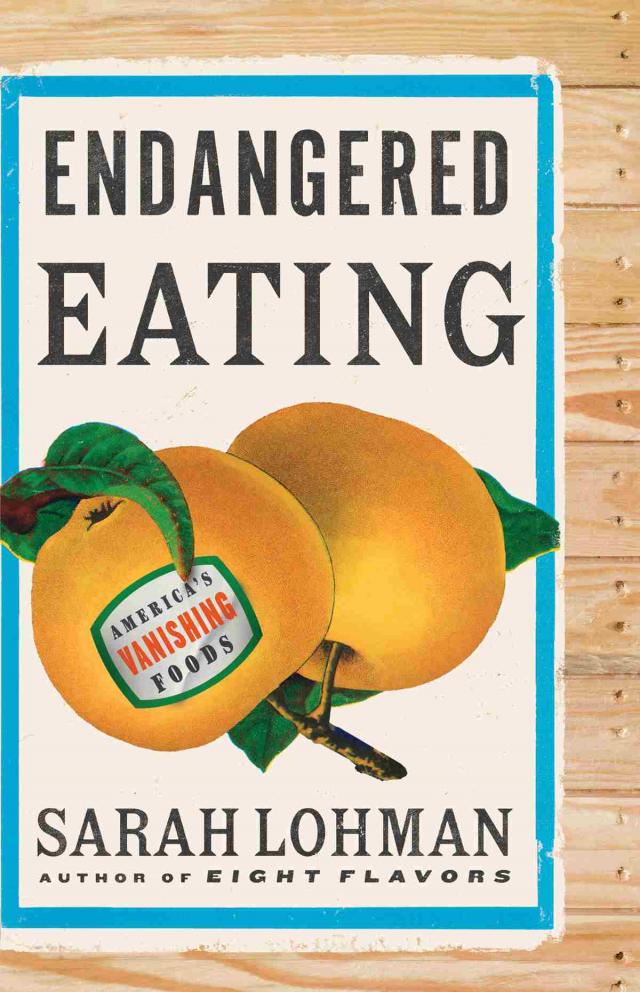
America’s Vanishing Foods
ENDANGERED
EATING
Sarah Lohman
This book is dedicated to my mom, Karen Lohman. She’s my first reader, my copyeditor, and my formatter of thousands of footnotes—as well as my champion, my supporter, and my advocate. She’s an incredible woman and I wouldn’t be half the person I am today without her.
I love you, Mom.
CONTENTS
MAP
INTRODUCTION: What Is Endangered Eating?
1. Coachella Valley Dates
2. Kupuna Kō Hawaiian Legacy Sugarcane
3. Dibé Navajo-Churro Sheep
4. Sxwo’le Straits Salish Reefnet Fishing
5. Manoomin Anishinaabe Wild Rice
6. Heirloom Cider Apples
7. Kombo Hakshish Choctaw Filé Powder
8. Carolina African Runner Peanuts
NOT THE END
ACKNOWLEDGMENTS
FURTHER READING
REFERENCES
INDEX
INTRODUCTION
What Is Endangered Eating?
While many organizations advocate for the preservation of endangered animals, Slow Food International fights for the conservation of endangered edibles. As a part of their mission, Slow Food curates an ever-growing, online catalog of ingredients that it has determined are both in danger of extinction and worthy of being preserved. This list is called the Ark of Taste.
The Ark of Taste contains over 5,000 “delicious and distinctive” foods from 150 countries, ingredients like Bay of Fundy dulse seaweed from Canada, Catamarca llama meat from Argentina, traditional Lambic beer from Belgium, and su filindeu, the “threads of God,” a Sardinian pasta known as the rarest on the planet. The current United States Ark includes more than 350 entries from all over the country.
I had always thought of American cuisine as ever expanding to include new foods. But after scrolling through the entries on the United States Ark of Taste, I realized there are hundreds of plants, animals, and food traditions that are disappearing from my country’s food repertoire.
Over the course of a year, I traced a selection of Ark of Taste entries to their homes, following the seasons of their harvest. I met the farmers, shepherds, fishers, and makers who produce these rare foods and who have invested their lives—and finances—into these products’ growth. Frequently, these ingredients are key to the identity of the cultures they come from, representing a deep, spiritual connection between humanity and the Earth.
But often on my journey, I discovered that the path to saving these ingredients wasn’t clear-cut. Nor was the question of who should have access to these ingredients—and at what price.
* * *
SLOW FOOD INTERNATIONAL was founded in Italy in 1986 in reaction to the opening of a McDonald’s near the Spanish Steps, a famous Roman landmark. In the organization’s own words, they “prevent the disappearance of local food cultures and traditions, counteract the rise of fast life and combat people’s dwindling interest in the food they eat.” The Ark of Taste was launched in 1996 and is now the core of the organization’s work.
To add a food item to the Ark, the process begins with regional Ark of Taste committees who work with local Slow Food chapters, as well as individual advocates to identify and nominate food items. The list includes plants, foraged and farmed; animals, wild and domesticated; processed products like preserves, baked goods, cheeses, and spirits; and even traditional techniques. When an item is submitted, the nominators must answer a list of questions and include context about the item’s cultural and agricultural significance. Once a nomination is approved by a regional or state chapter, it is submitted to the international Slow Food office in Italy. There, the information about the nomination is verified by a team of experts that includes veterinarians, historians, agroecologists, and agronomists. They consider four factors when selecting new Ark of Taste ingredients:
Endangered
Produced in limited quantities, the food will not be around in another generation or two without immediate action. Risk factors may be biological, commercial, or cultural.
Good
Whether an animal breed, baked treat, fruit, spice, grain, or beverage, the food is prized by those who eat it for its special taste and its cultural or historical significance.
Clean
Everything on the Ark of Taste has the potential to be grown, raised, or produced without harm to the environment.
Fair
No commercial or trademarked items are allowed onto the Ark of Taste, only foods that anyone may champion, produce, share, or sell.
When a new food is “on-boarded” to the Ark, Slow Food takes a multi-pronged approach to increasing the rare ingredient’s visibility. The organization may begin by working directly with producers to identify solvable issues that would increase or sustain production of that food, as well as offering aid through the support of veterinarians and agronomists. Slow Food creates events to generate press for the food, encourages chefs to incorporate the ingredient into their menus, and facilitates access to seeds for farmers and gardeners through companies like the Seed Savers Exchange and Baker Creek Heirloom Seeds. In general, the organization facilitates ways for the public to seek out these foods, learn their stories, and purchase and consume them, except when it comes to endangered wild species, which initially may need conservation.
The “ark” references Noah’s Ark, the Old Testament story in which God commanded Noah to build an ark and save two of every land animal from the earth-cleansing flood. But it’s not a perfect foodie metaphor; the duos that have made it on board are more like the Angus beef and beefsteak tomatoes of the world—foods that are already well-known and successful. In the case of foodways in America, a rising tide has not lifted all boats: modernization and colonization have allowed cherished, delicious foods to get washed away in the “flood.”
* * *
I HAD BEEN SORTING THROUGH Ark entries on their website for weeks when I serendipitously met a rare food face to face. On a beautiful September day in 2018, my mom and I were driving back roads in rural Ohio, heading to a remote farm to pick late-season blackberries. I planned to turn the fruit into blackberry brandy using a recipe I had found in an 1890s’ manuscript. My mom made a left turn onto Route 511 near Kipton—an abandoned gas station on one corner of the intersection and pastures stretching out on all sides—and my eyes landed on the animals grazing to the left of the road.
“That’s a Texas Longhorn!!” I yelped. The animal was unmistakable: two horns branched out horizontally from either side of its head, about eight feet tip to tip.
Always willing to humor me, my mother turned the car around and pulled over at the pasture. I leapt out. The enormous buff-colored animal gazed at me placidly from the other side of the fence, his preposterously huge horns curving gently toward the sky.
I had never seen a Longhorn in the flesh before, and never imagined I would stumble across my first one in Ohio. They are the iconic animal of Texas, after all. Because of the Texan tradition of eating their meat, the Longhorn is listed on the Ark of Taste. When the Mexican province of Coahuila y Tejas was being colonized, Christian missionaries brought cattle with them. But the missions these men founded were often abandoned due to conflict with the locals or disease. The cattle left behind went feral, eventually developing into Texas’s first naturalized cattle breed, the Texas Longhorn. Recaptured, they were a favorite of ranchers for their heartiness and were kept primarily for their meat, but also for leather, tallow, and labor. At the end of the nineteenth century, instead of being slaughtered locally, cattle began to be shipped to Midwest slaughterhouses. Longhorns fell out of favor because not only did they not put on weight as quickly as other breeds, but their wide horns did not fit into narrow railcars and crowded feedlots. The Texas Longhorn is currently listed as critically endangered, meaning only a few thousand registered animals exist worldwide.
I left the Longhorn’s pasture fence and trudged up a steep driveway, hoping to find someone who could answer my many questions. One of the owners happened to be riding down the drive on a motorbike. He looked confused when he spotted me—a tattooed, blue-haired young woman—trudging up his driveway. I flashed my big, toothy smile, introduced myself, and told him I wanted to know more about the Longhorns.
“Oh, they’re so docile!” CJ, the rancher, told me with a grin. “They’ll eat an apple out of your hand if you have one. We have twelve—all bulls.”
“Why?” I asked, stunned.
“Why keep them? Well, they’re really fun to look at! And they’re so gentle. And they’re really inexpensive lawn mowers.” And that was enough for CJ. And good for him—his twelve bulls are twelve more in the battle to fight extinction.
I made Mom stop to see the Longhorn cattle again on our way back home, our buckets filled to the brim with nine pounds of overripe berries. There were three bulls in the pasture this time: the beige one I had seen earlier, a chocolate-brown friend, and a white bull with brown flecks. They navigated deftly around one another, occasionally using their horns to dislodge flies from their backs. As I watched the animals graze, listening to their rhythmic chomp-chomp as they ate, I realized the Ark of Taste had already made me more aware of my world. In the past, I would have just driven by this field. Instead, I stopped and felt a genuine sense of awe at the chance to witness these animals. I wanted more opportunities to experience rare foods of America.
For every item on the Ark, I knew there must be a story behind its fadin
In California, I visited Date Gardens and chewed the sweet flesh of dates found nowhere else in the world. In Hawaii, I climbed mountains to understand the complex system of agriculture historic Hawaiians used to cultivate brilliantly colored heirloom sugarcane. In the Navajo Nation, I assisted a shepherd in slaughtering and butchering a Navajo-Churro lamb, an animal long prized by the Diné for its fleece and meat. In the Pacific Northwest, I hauled in nets of pink salmon on a reefnet fishing gear, a complex, ancient, and highly effective indigenous technique. In the Midwest, I slid through wild rice beds in a canoe, learning how to “knock” the precious manoomin into the boat. In New York, I hunted in centuries-old orchards for rare cider apples that hung on trees so geriatric they were held up by crutches. In Louisiana, I experienced traditional Cajun cuisine cooked with filé powder, a flavoring and thickener made from sassafras, now rarely processed in the traditional manner. And in South Carolina, I stood in a field of the first peanut cultivated in North America, the Carolina Africa Runner peanut, believed to have been extinct since the 1930s.
These foods led me to the stories of people, both historical and contemporary, who shepherd, farm, fish, and forage these precious ingredients. There’s David Fairchild and Walter Swingle, the “agricultural explorers” of the turn of the twentieth century, who sent dates from the markets of Baghdad to be grown in California; and growers like Sam Cobb who continue the tradition of small, family-owned date farms today. And Lili‘uokalani, the last Queen of Hawaii, who ruled while American sugar moguls tried to depose her; and farmers like Anthony DeLuze, who grows traditional sugarcane in an urban Honolulu plot. There’s Manuelito, the Diné hero who worked to protect his people’s independence and flocks of sheep; and Ron Garnanez and Aretta Begay, advocates who care for their own flocks and promote the Navajo-Churro breed today. There are the Lummi, who historically caught salmon in the Puget Sound before colonists pushed them from their claims; and Kyle Kinley, who captains the first Indigenous-owned, commercial reefnet gear on the water in over a century. There’s Nanaboozhoo, the historical hero of the Anishinaabe people, who discovered manoomin; and Roger Labine and Tracy Goodwin, who work to preserve this sacred food in their communities today. There were the skilled, enslaved orchardists and cider makers like George and Ursula Granger, and contemporary cider makers like Charles Rosen, who hope to preserve endangered apples by reviving historical ciders. There are the Choctaw people, who were the first to introduce sassafras powder to the Creoles of New Orleans hundreds of years ago; and Lionel Key, of Uncle Bill’s Spices, who was the last person producing sassafras filé in the traditional manner. There were the free Black women, like Celia Hall, who sold groundnut cakes on the streets of Charleston in the nineteenth century; and farmers like Nat Bradford, who seek to revive heirloom crops like the Carolina Runner peanut. These custodians of America’s culinary heritage often fight against legislature, financial burden, and the effects of climate change to keep their food traditions from disappearing.
Although the reasons these foods may be on the brink of extinction are various, the Ark of Taste offers a simple solution for how to prevent them from vanishing: “Eat it to save it.” Slow Food believes that if we create awareness and demand, these foods won’t disappear. But is the solution to saving these ingredients so simple? There’s only one way to find out: let’s eat.
ENDANGERED EATING
ONE
Coachella Valley Dates
It was a sunny, but chilly, day in February 2019 when I visited the Sky Valley date farm of Sam Cobb. Sky Valley is part of the Coachella Valley in Southern California, nestled between two nature preserves, Joshua Tree National Park and the San Bernardino National Forest. The Coachella Valley stretches south from Palm Springs through the towns of Indio and Mecca and ends in the man-made Salton Sea, less than a hundred miles from the Mexican border. Sometimes called the American Sahara, it’s not uncommon to have more than one hundred days a year over 100 degrees. But aquifers run deep underground, filling springs and oases. The hot temperatures, and access to plentiful water, make the area ideal for growing dates.
Dates have been grown in the Coachella Valley for over 120 years, originally from imported seeds and suckers—baby trees that grow off the trunks of established trees—from Baghdad and Algiers, Pakistan and Egypt. The plants arrived as part of a government program to bring profitable agriculture to what was perceived as empty desert.
In the 1910s, the secretary of the USDA visited the valley to address the new date growers. He commented afterward that it had been so hot he nearly perished, and he “wondered whether the government could find any justification for encouraging people to make their homes in such an insufferably hot part of the country.”
Of course, Coachella wasn’t the vacant, unsettled desert that the American government made it out to be. It had been occupied for at least 5,000 years by the Cahuilla Indians. The Cahuilla were expert well-diggers, built irrigation systems to grow crops, foraged for plants, and hunted game. They were doing just fine without the American government, and, in fact, had been left alone through most of the nineteenth century because of the valley’s extreme climate. At the turn of the twentieth century, the valley was thought of as one of the US final frontiers. When the Southern Pacific Railroad came through in 1872, building a depot in Indio (then named Indian Wells), it was a herald of the changing times. In 1876, the Cahuilla were pushed to the Agua Caliente Reservation, which ironically makes the tribe the largest landowners in the Palm Springs area today. Removed from much of their traditional lands, the Cahuilla began to work on the farms and ranches of white settlers or sold them handmade items. Many of the early settlers acquired their farms through the Desert Land Act, a federal law allowing men to apply for land in the Southwest as long they planned to “irrigate” and “reclaim” the land. In the case of Indio, this was land that had previously belonged to the Cahuilla.
Today, it’s estimated that over 90 percent of the dates grown in the US come from the Coachella Valley, about 35,000 tons annually. Although the Coachella Valley primarily grows commercial date varieties like Medjools and Deglet Noors, several small farmers still carry on the tradition of growing unique date varieties that were developed in the area a century ago. It’s these rare American dates, grown nowhere else on the planet, that have been onboarded to the Ark of Taste: Empress, Abada, Blonde Beauties, Brunette Beauties, Honey, McGill’s, Tarbazal, and Triumph.
I had come to Sam Cobb Farms with Dr. Sarah Seekatz, the world’s foremost expert on Coachella Valley dates. She wrote her dissertation on the subject and also grew up in the area. Sam had promised to show us a rare date palm, an Empress. Sam’s Empress trees were given to him by another date garden owner, Ben Laflin, Jr. Laflin, who passed away in 2015, was born in the Valley. His parents had founded the Oasis Date Gardens. Laflin eventually took over from his parents and ran the Gardens with his wife for most of his life, even traveling to Morocco to visit the country of origin of his family’s palms.
Sam led us between the rows of date palms to the foot of an Empress tree. Sam doesn’t harvest his Empress dates—because he only has a few, he feels he doesn’t produce enough to sell—so the bundles of mahogany-red fruit hung without a cover to protect them from rain and pests. Sam grabbed his ladder, pushed it between the palm fronds, and confidently ascended.
“You’ve been doing this long enough, you know where to put it between the fronds, when it’s going to shift and settle as you move farther up, when the wind is going to shake it,” he told Sarah and me as the wind buffeted the ladder. It didn’t bother Sam, and he picked a few handfuls of Empress dates, and climbed back down to deliver them.






